

Alex Murray
14 posts
We’re excited about the upcoming Ubuntu 24.04 LTS release, Noble Numbat. Like all Ubuntu releases, Ubuntu 24.04 LTS comes with 5 years of free security maintenance for the main repository. Support can be expanded for an extra 5 years, and to include the universe repository, via Ubuntu Pro. Organisations looking to keep their systems secu

According to a recent study, 96% of applications in the enterprise market use open-source software. As the open source landscape becomes more and more fragmented, the task to assess the impact of potential security vulnerabilities for an organisation can become overwhelming. Ubuntu is known as one of the most secure operating systems, but

Canonical Ubuntu 22.04 LTS is the latest long term support release of Ubuntu, one of the world’s most popular Linux distributions. As a Long Term Support release, Ubuntu 22.04 LTS will be supported for 10 years, receiving both extended security updates and kernel livepatching via an Ubuntu Advantage subscription (which is free for persona
Ubuntu 21.10 is the latest release of Ubuntu and comes as the last interim release before the forthcoming 22.04 LTS release due in April 2022. As the interim releases are often proving grounds for upcoming features in the LTS releases, this provides a good opportunity to take stock of some of the latest security features

Ubuntu 21.04 is the latest release of Ubuntu and comes at the mid-point between the most recent Long Term Supported (LTS) release of Ubuntu 20.04 LTS and the forthcoming 22.04 LTS release due in April 2022. This provides a good opportunity to take stock of some of the latest security features delivered in this release,

The Security Podcast covers the most interesting security fixes around Ubuntu, with in-depth discussions around the latest vulnerabilities and updates.

The Security Podcast covers the most interesting security fixes around Ubuntu, with in-depth discussions around the latest vulnerabilities and updates.

In August 2020, a set of security vulnerabilities in GRUB2 (the GRand Unified Bootloader version 2) collectively known as BootHole were disclosed. Today, another set of vulnerabilities in GRUB2 were disclosed, with similar implications. Because GRUB2 is a key component of the boot process, vulnerabilities in it can permit attackers to vio

Ubuntu has evolved a lot since its early beginnings as an easier-to-use derivative of Debian that catered primarily to the nascent Linux desktop market. Today Ubuntu is deployed beyond just your laptops at home and in the office. Nowadays you are more likely to find Ubuntu in the cloud, powering some of the world’s best

Responsible disclosure and coordinated response as a benefit to all Today we released USN-4432-1 announcing updates for a series of vulnerabilities termed BootHole / ‘There’s a hole in the boot’ in GRUB2 (GRand Unified Bootloader version 2) that could allow an attacker to subvert UEFI Secure Boot. The original vulnerability, CVE-2020-1071

Today, Intel announced a group of new vulnerabilities affecting various Intel CPUs and associated GPUs, known as TSX Asynchronous Abort (CVE-2019-11135), Intel® Processor Machine Check Error (CVE-2018-12207), and two Intel i915 graphics hardware vulnerabilities (CVE-2019-0155, CVE-2019-0154). TSX Asynchronous Abort (TAA) is related to th
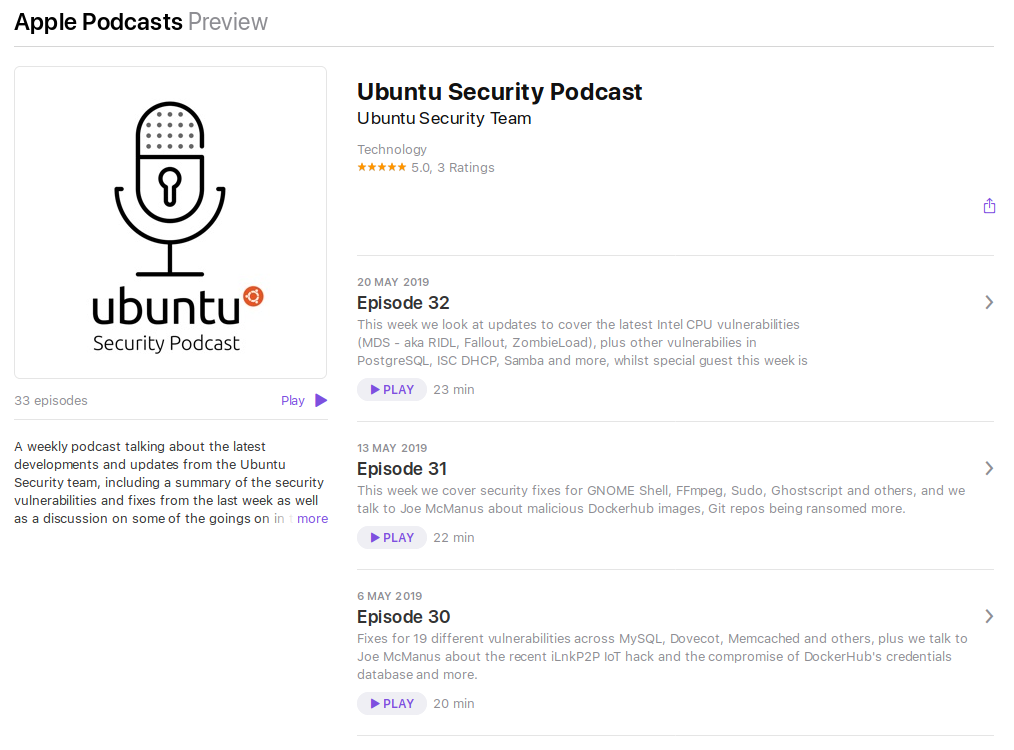
The Ubuntu Security Podcast is a weekly podcast covering all the latest news and developments from the Ubuntu Security team. Each week the team discuss the various security updates that have been published across the Ubuntu releases, describing the technical details of both the security vulnerabilities as well as the fixes involved. Due t

Microarchitectural Data Sampling (MDS) describes a group of vulnerabilities (CVE-2018-12126, CVE-2018-12127, CVE-2018-12130, and CVE-2019-11091) in various Intel microprocessors, which allow a malicious process to read various information from another process which is executing on the same CPU core. This occurs due to the use of various m
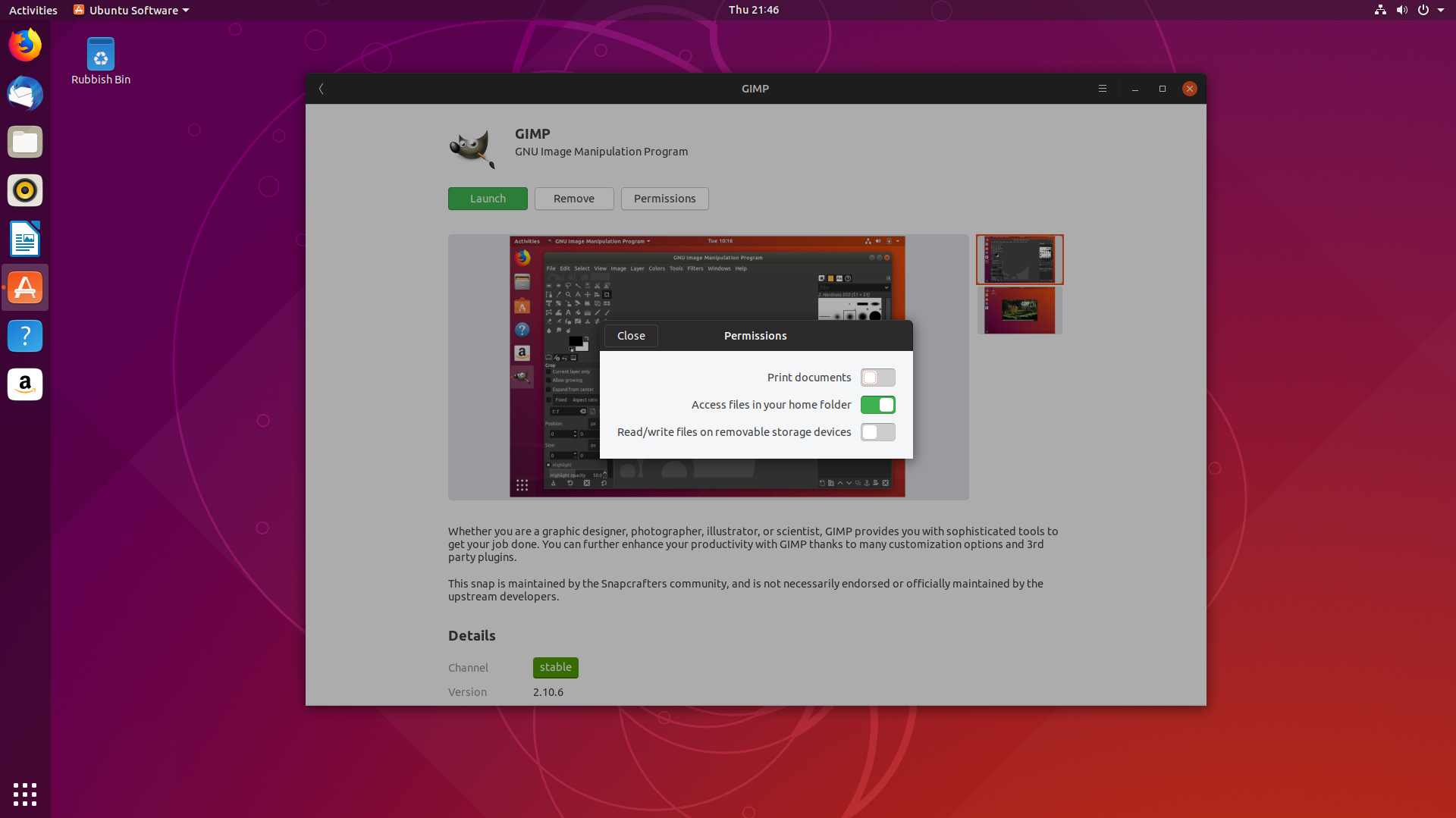
Snap is a Linux application package management system which allow developers to easily publish self contained software packages (snaps) that work across many distributions and versions of Linux. Snaps have security at their heart, and are designed to ensure all applications support the principle of least privilege / authority. That is, ea