
Blog posts tagged "Extended Security Maintenance"

Ubuntu and CentOS are both popular examples of open source Linux operating systems adopted because of the breadth of community support, but also because of the availability of enterprise-grade support. However, since the announcement last December, the CentOS project as we knew it, will be discontinued. Many CentOS users are currently loo
Weighing the options with an Ubuntu 16.04 upgrade Ubuntu 16.04 LTS Xenial Xerus is transitioning from its five-year standard security maintenance window in four months, leaving many asking the question: can I manage an Ubuntu 16.04 LTS upgrade by April 2021, or do I need more time to plan this migration? In the Less than
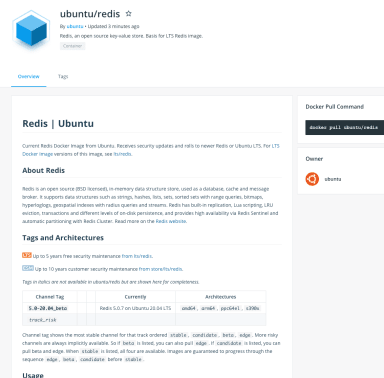
Ten year maintenance commitment on app images provides secure cloud software supply chain November 24th 2020: Canonical has published the LTS Docker Image Portfolio, a curated set of secure container application images, on Docker Hub. The LTS Docker Image Portfolio comes with up to ten years Extended Security Maintenance by Canonical. “LT
Ubuntu 16.04 LTS Xenial Xerus will enter the extended security maintenance (ESM) period in April 2021. This article explains the ESM period and provides a guide for six key considerations when planning a migration path from Ubuntu 16.04 LTS. Contact us with your ESM questions What is ESM? Every Ubuntu Long Term Support (LTS) release

Interana, an analytics software provider, enables users to run advanced big data queries on raw customer data and delivers answers in seconds. Their customers include Microsoft, Comcast and Salesforce. Interana’s leading-edge platform is based on Ubuntu and deployed directly inside customers’ public cloud environments. This empowers users

Would you like to enhance your Linux security? Do you wonder what factors should be considered when evaluating your open source security from both – the infrastructure and the application perspectives? Are you keen to learn the Ubuntu security team approach? I’ve learned that CVE patching is indeed an important puzzle, but without a struc
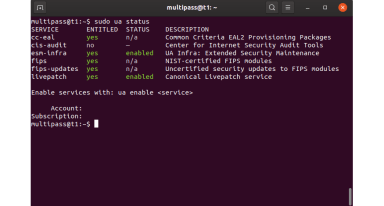
Canonical is happy to announce that all community users are entitled to a free Ubuntu Advantage for Infrastructure account for access to Extended Security Maintenance (ESM) and Kernel Livepatch* for Ubuntu 14.04 LTS (Trusty Tahr) for up to three machines, and up to 50 machines for all official Ubuntu Members. ESM provides fixes for high
Linux security is central to each release of Ubuntu, the most widely-used Linux distribution. With Ubuntu’s predictable six-month release cycle, users know when to expect the latest upstream open source capabilities and security. Long Term Support (LTS) vs Interim releases Every two years in April, a Long Term Support (LTS) release is pub
Issues have been identified in the way the Linux kernel’s TCP implementation processes Selective Acknowledgement (SACK) options and handles low Maximum Segment Size (MSS) values. These TCP SACK Panic vulnerabilities could expose servers to a denial of service attack, so it is crucial to have systems patched. Updated versions of the Linux
Microarchitectural Data Sampling (MDS) describes a group of vulnerabilities (CVE-2018-12126, CVE-2018-12127, CVE-2018-12130, and CVE-2019-11091) in various Intel microprocessors, which allow a malicious process to read various information from another process which is executing on the same CPU core. This occurs due to the use of various m
Extended Security Maintenance (ESM) is now available for Ubuntu 14.04 LTS to provide ongoing security patches for high and critical CVEs for UA Infrastructure customers.
As 14.04 reaches the end of its five-year, Standard Security Maintenance, LTS window in April 2019, support for the OS is transitioning into a new phase – Extended Security Maintenance (ESM).
Ubuntu 14.04 LTS – As 14.04 reaches the end of its five-year LTS window in April 2019, Ubuntu 14.04 LTS ‘Trusty Tahr’ transitions to Extended Security Maintenance (ESM). ESM is a feature available through Ubuntu Advantage, Canonical’s commercial support package. ESM as a stand-alone addition was available for 12.04 only. Contact the Ubunt
Application updates come and go, often they provide your business with added value, but sometimes an update isn’t what is needed or wanted for a legacy application. Choosing not to update an application can cause issues. Often, that application becomes unsupported, and with security patches no longer available, it can see your business fa
- Previous page
- 1
- 2
- Next page