

Some Snapcraft operations mandate that users identify themselves. For example, if you want to push your snap to the Snap Store, you need to login on the command line. The process relies on the internal login mechanism built into Snapcraft. A preview functionality for a new Web-based authentication flow is available as an experimental feat

The fintech ecosystem is flourishing and exciting things are happening these days at the intersection of digital technology and financial services – thanks in part to an infusion of global fintech investment that reached US$98 billion across 2,456 deals in H1’21. This far outpaces last year’s annual total of $121.5 billion across 3,520 de

The leading fair in London, Paris, Frankfurt and Singapore will open the doors of its first edition to C-level experts and executives in Madrid. Canonical will be attending as a Silver level Sponsor, presenting strategies and trends for industry leading companies, as part of the DevOps stream. Register for the event Book a meeting Reduce
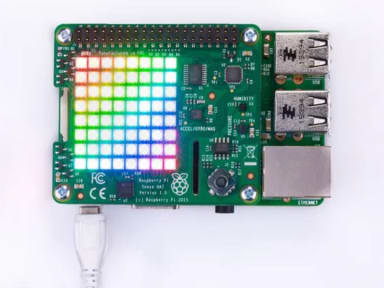
Ubuntu Impish Indri supports the Raspberry Pi Sense HAT. This guide helps users get started with both the Sense HAT and its desktop emulator package.

Ubuntu 21.10 is the latest release of Ubuntu and comes as the last interim release before the forthcoming 22.04 LTS release due in April 2022. As the interim releases are often proving grounds for upcoming features in the LTS releases, this provides a good opportunity to take stock of some of the latest security features

DFI’s GHF51 mini industrial-grade motherboard, and the EC90A-GH mini fanless industrial computer, are the world’s first industrial computer products that have passed the Ubuntu IoT hardware certification and are equipped with high-performance AMD processors. The 1.8-inch motherboard of the Ryzen R1000 processor has the same small size as
September news is charged with analysis and comment of what has been a month with important announcements for open source robotics. It has been a month to understand that, in a nascent and fragmented market, the actors have a deeper impact upon all the stakeholders. A flop won’t be just a flop, it could be

Ubuntu Server 21.10 (Impish Indri) expands on edge use cases with a minimised system installation option in the Ubuntu Server Live Installer, and native, certified drivers for NVIDIA vGPU software on Ubuntu 20.04 LTS and 18.04 LTS, fully supporting sophisticated AI/ML workloads.

Newsletter signup

14 October 2021: Today, Canonical released Ubuntu 21.10 – the most productive environment for cloud-native developers and AI/ML innovators across the desktop, devices and cloud. “As open source becomes the new default, we aim to bring Ubuntu to all the corners of the enterprise and all the places developers want to innovate,” said Mark Sh

On October 23, the historic Indy 500 will experience a new type of race. Not just a race for all the fans and lovers of racecars, but a race that is now changing the future of driving. Autonomous mobile robots will be racing to see not only who is the fastest, but also the most
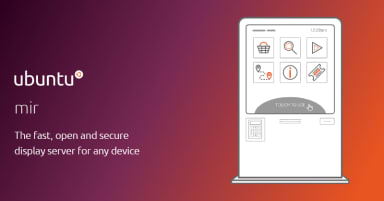
With another release of Mir, we have prepared a new blog with the a roundup of the product’s newest features. Mir is our flexible display server that provides a set of libraries and a Wayland compositor for building Wayland-based shells with integrated window management. Today, Canonical is launching Mir 2.5, a new version of Mir
On the 4th and the 5th of October 2021, the Web & Design team ran a remote Hackathon. The theme of it was to build tools that would make our life easier at Canonical. Creativity and collaboration are at the heart of any Hackathon. 26 visual and UX designers, developers and project managers split into
Late last year, SUSE completed their acquisition of Rancher Labs, and in doing so, has had to make some decisions on their product roadmap and ongoing support commitments. SUSE Enterprise Storage, SUSE’s software-defined storage product based on Ceph, doesn’t appear to have made the cut. According to their support pages, it is scheduled f

To build your Data center networking, learn about Software Defined Netowrking and its architecure, its main components and different flavours

Canonical, the makers of Ubuntu, will have a major presence at this year’s KubeCon + CloudNativeCon NA. The Cloud Native Computing Foundation’s flagship conference brings together adopters and technologists from leading open-source and cloud-native communities. It takes place Oct. 11-15 in Los Angeles and with a virtual option. Ubuntu is

Bare metal Kubernetes (K8s) is now easier than ever. Spectro Cloud has recently posted an article about integrating Kubernetes with MAAS (Metal-as-a-Service. In the article, they describe how they have created a provider for the Kubernetes Cluster API for Canonical MAAS (Metal-as-a-Service). This blog describes briefly the benefits of ba
Ubuntu tech blog
Deep dives for developers
Visit the Ubuntu Tech Blog for deep dives into product features, step-by-step tutorials, and the latest updates from Canonical's engineering teams.